
The Riddle Lab
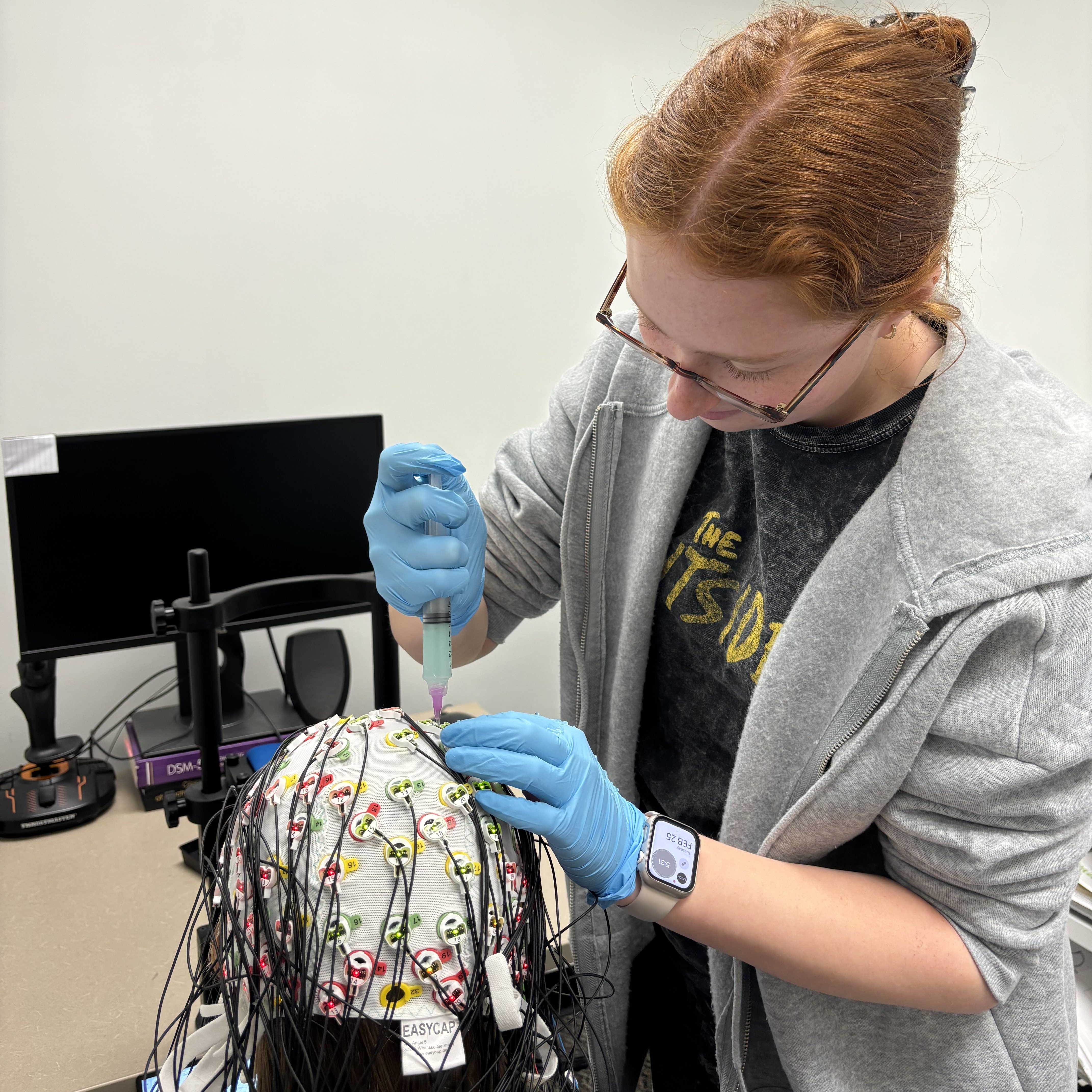
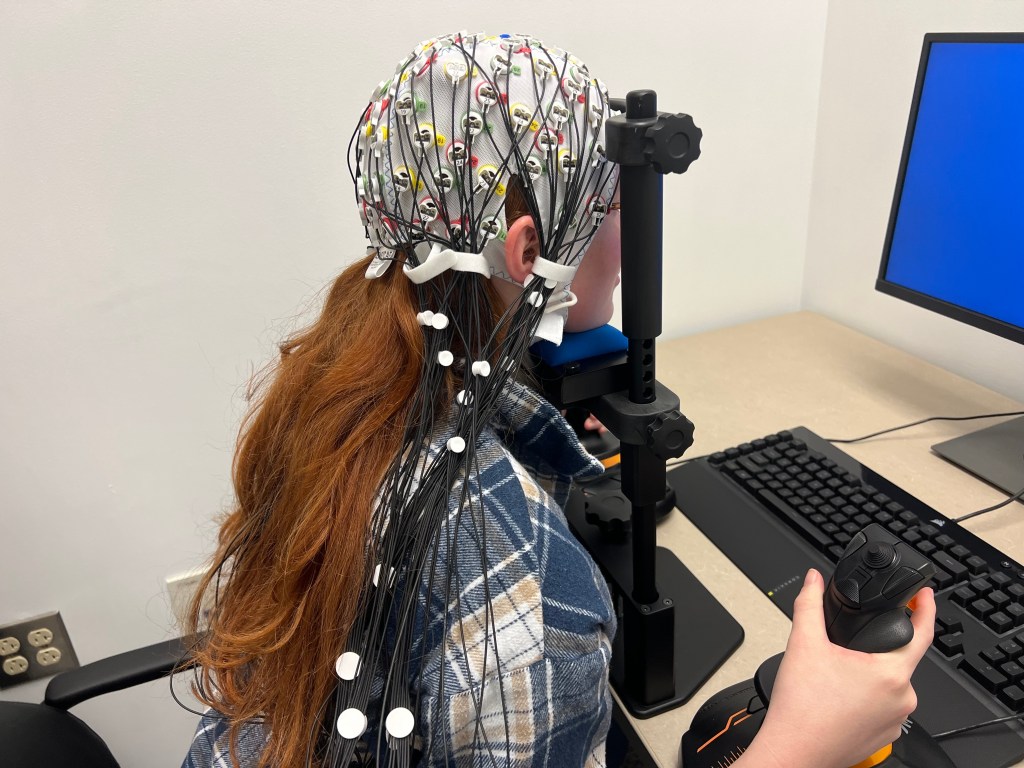
I am currently the Lab Manager for the Riddle Lab at Florida State University, under the supervision of Dr. Justin Riddle. The Riddle Lab is renowned for its in-depth research into Cognitive Control in Psychiatric Illness. In my role, I have had the opportunity to engage in various projects that examine complex psychological phenomena, utilizing techniques such as EEG, fMRI and tES. This research not only explores the intricate relationship between mood disorders and cognitive functioning, but also seeks to identify biomarkers that could lead to more effective interventions. I have also had the opportunity to work under the clinical supervision of Dr. Thomas Joiner, administering clinical assessments for research purposes.
Skills
| Psychophysiology | EEG ActiCHAMP+ | MRI |
| Neuromodulation | tES/tACS | |
| Data Analysis | MATLab | R Studio |
| Clinical Assessments | MINI | HAMD |
Undergraduate Thesis
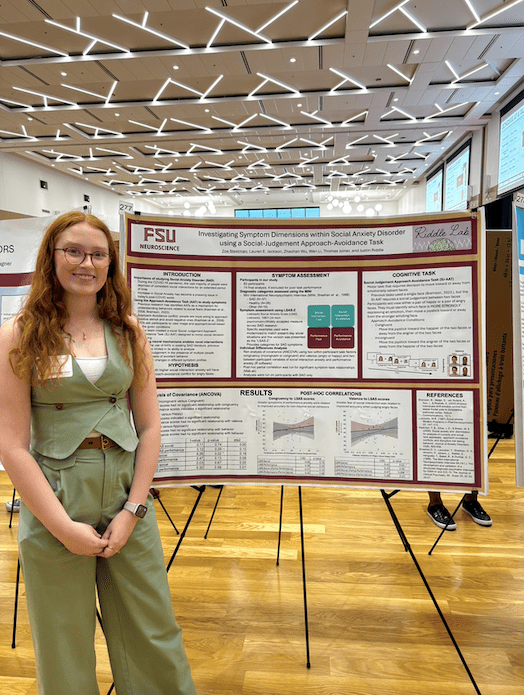
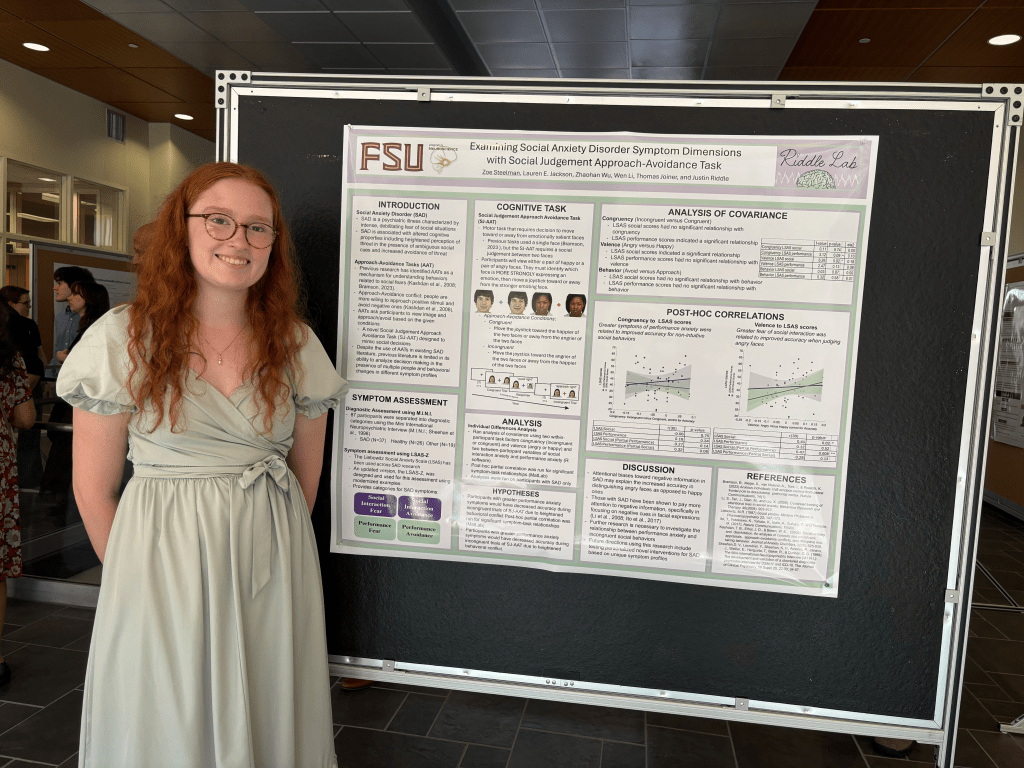
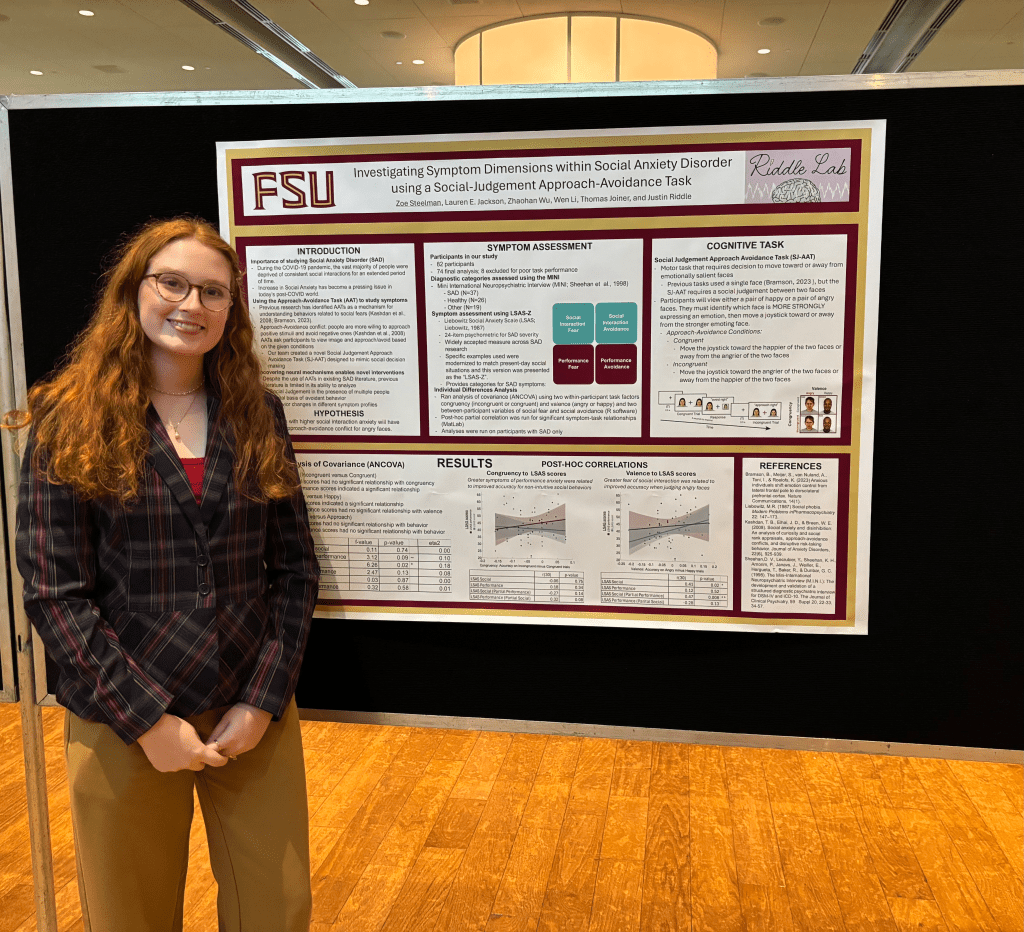
Analysis of Social Anxiety Disorder Subdimensions in Response to Approach Avoidance Task
Social Anxiety Disorder (SAD) is clinically defined by continuous experiences of severe, impairing fear in social situations and judgment, accompanied by avoidance of these experiences. Current literature in SAD research points to two relevant cognitive processes: (1) increased threat perception in the presence of vague social cues, and (2) subsequent avoidance of this threat. In response to this observation, the researchers sought to investigate SAD symptoms and their interaction with threat perception. A novel Social Judgement Approach-Avoidance Task (SJ-AAT) was designed to decipher this relationship by asking participants to determine which of two faces was either angrier or happier, and then decide to approach or avoid the stronger emoting face. Three categories of participants were studied: healthy subjects, those with SAD, and those with other psychiatric disorders, as determined by the Mini International Neuropsychiatric Interview (MINI) for the DSM-V. Participants in all groups underwent a structured clinical interview, including the Liebowitz Social Anxiety Scale (LSAS). The LSAS denotes four different dimensions of social anxiety symptoms: fear of social interaction, avoidance of social interaction, fear of performance, and avoidance of performance.
Presentations
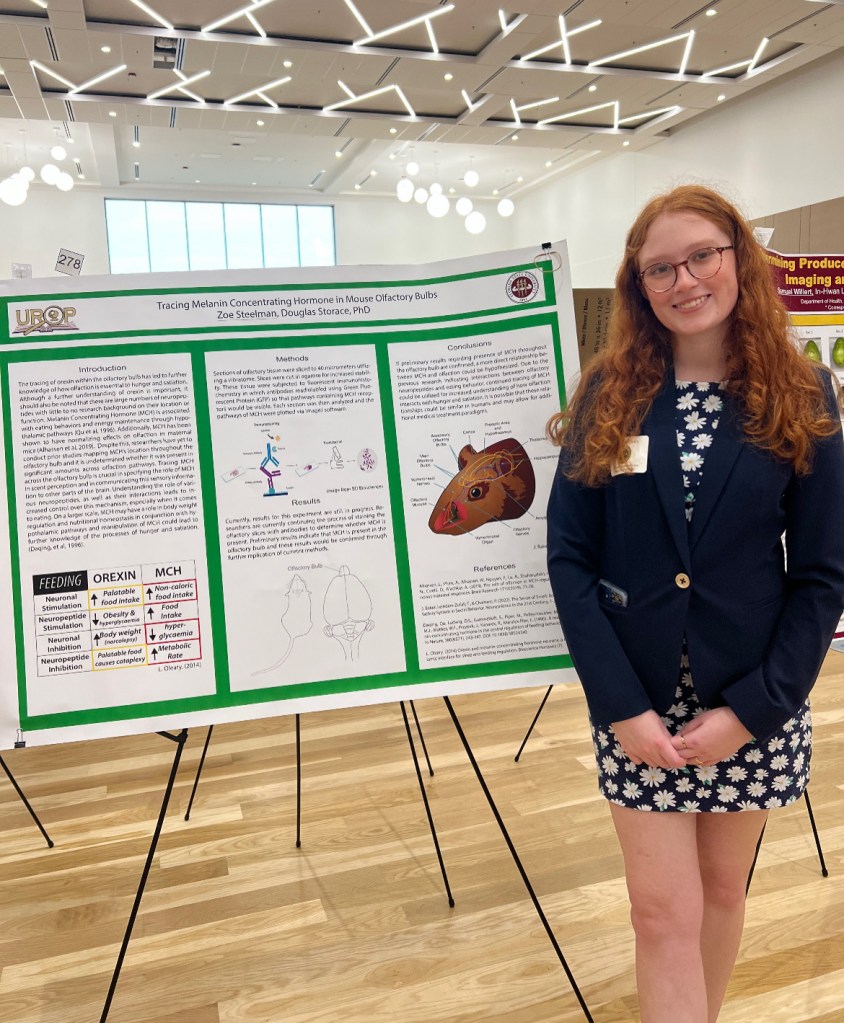

 Zoe Steelman